

Why Is It So Satisfying to Make Your Own Camp?
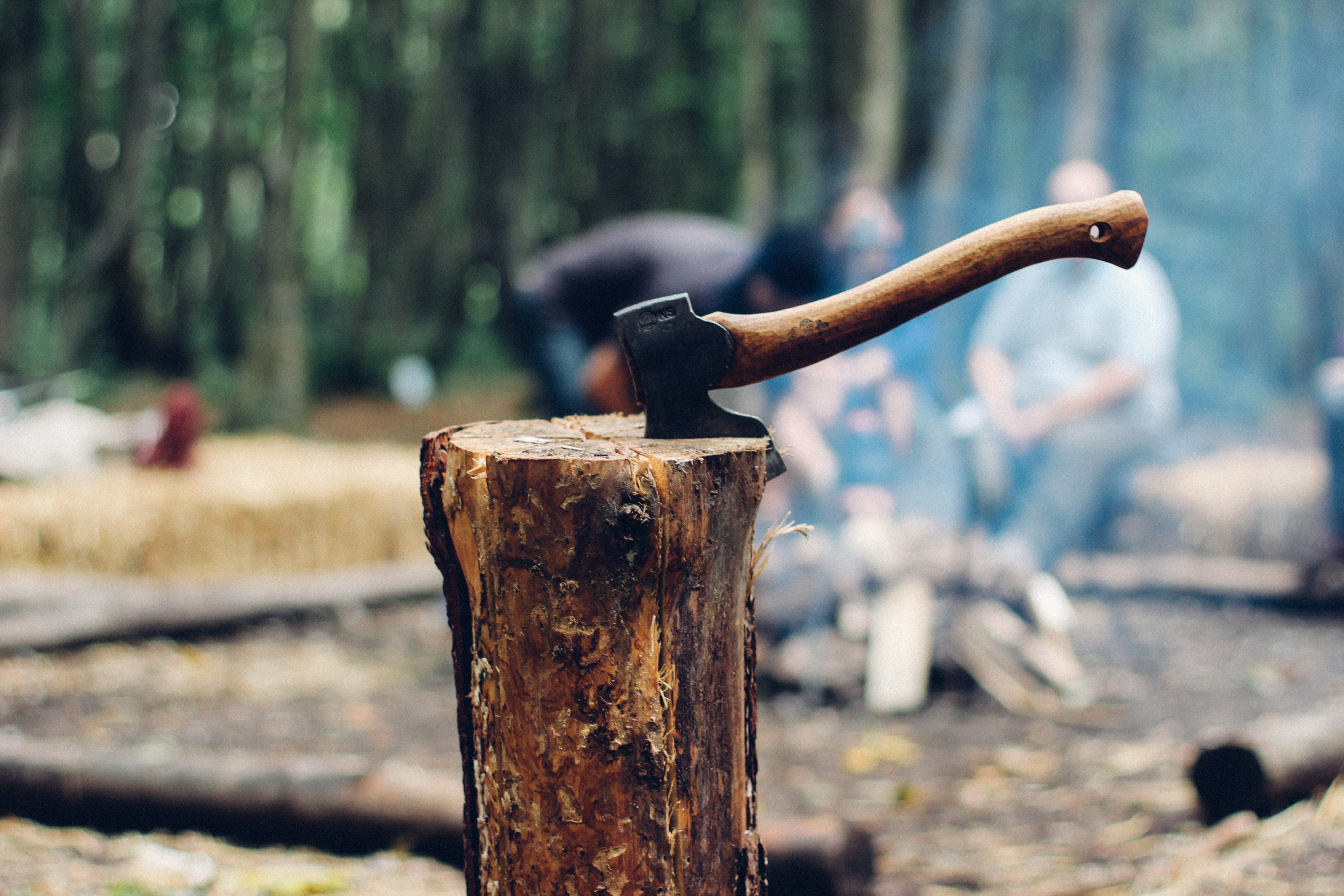
There is a strange satisfaction in arriving at a piece of woodland with very little and slowly turning it into a place where you can spend the next few hours.
When you first arrive, there isn't really a camp. There is just a patch of ground, some trees, your equipment and whatever the weather happens to be doing. Then you start working through the things you need. You find a suitable place to set up, put up your shelter, collect firewood, prepare the fire and organize your gear. Eventually there is somewhere to sit, something cooking and a fire burning in front of you.
None of these things are particularly difficult once you know how to do them. But the finished result feels different because you created it yourself.
Starting With Almost Nothing
One of the interesting things about making camp is how quickly a completely ordinary piece of woodland can become your temporary home.
You don't need much to make that happen. A shelter keeps the weather off you, a fire provides warmth and a place to cook, and a few basic tools allow you to prepare everything else you need.
The transformation is gradual. You arrive with a backpack or a few pieces of equipment and, over the next hour or two, you build the environment you are going to spend the evening in.
There is something satisfying about seeing everything come together.
At home, most of these things already exist around you. Your bed is ready, the kitchen is waiting and the heating is already working. You don't have to think about how any of it happened.
At camp, you have to create your own version of those comforts.
The Fire Is Usually the Turning Point
For me, the fire is what really changes a campsite.
Before it is burning, you're still working. You're collecting wood, preparing tinder, setting things up and thinking about what needs to be done next.
Once the fire is established, the whole pace of the camp changes.
You can stop for a moment and actually enjoy the place you've just created.
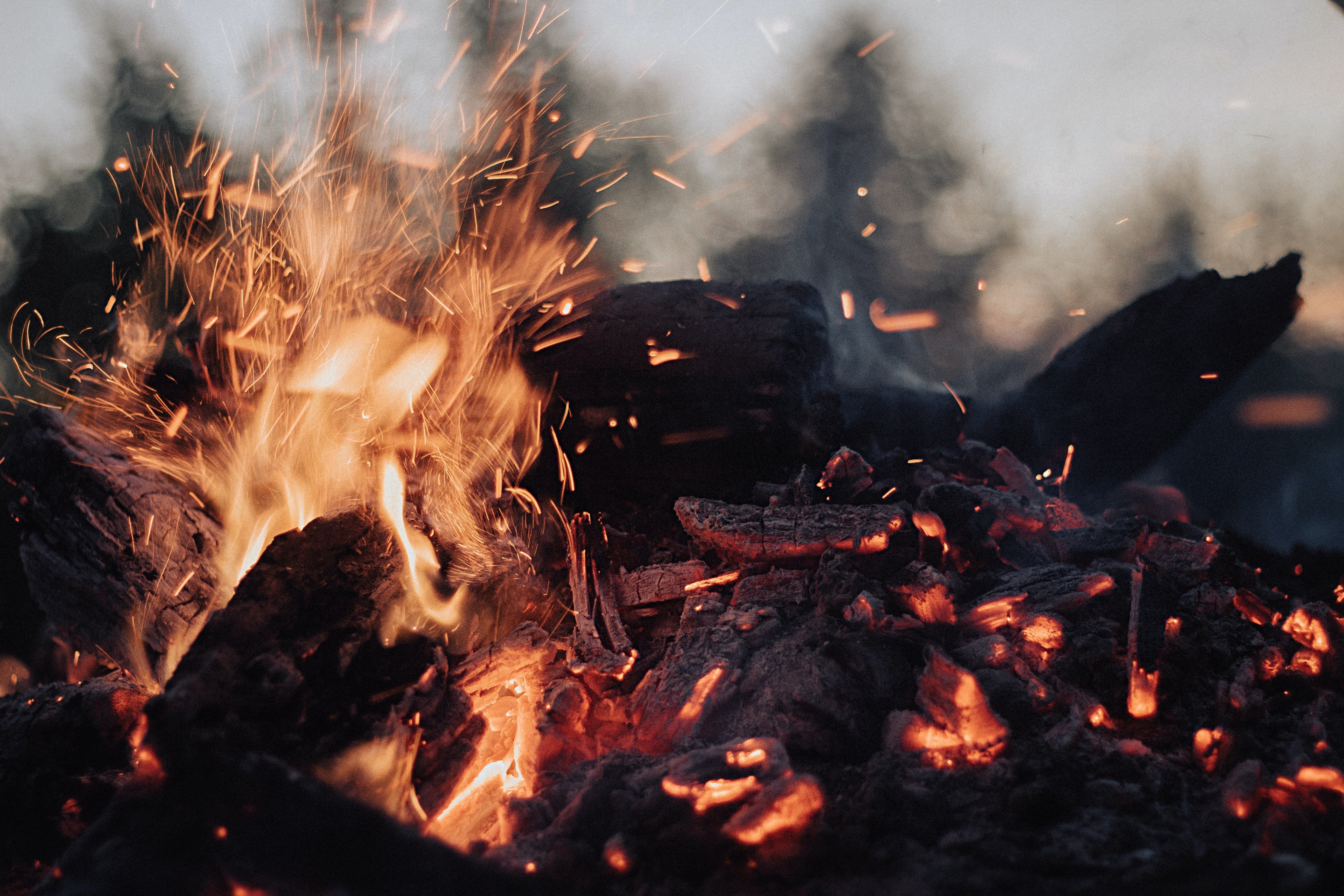
There is also a particular satisfaction in knowing that the warmth and light in front of you are there because you made them happen. You selected the wood, prepared it, started the fire and kept it going.
A modern heater can produce much more heat with almost no effort, but that isn't really the point. The fire is something you participated in creating.
That makes it feel different.
Everything Has a Job
Once you spend more time outdoors, you start noticing how many small jobs there are around a camp.
There is wood to prepare, water to collect, food to organize, equipment to put in the right place and shelter to adjust as the weather changes.
None of these jobs would be particularly interesting at home. Outside, they become part of the experience.
Even deciding where to put your knife, where to keep your firewood or where to hang your bag becomes useful. You begin organizing the space around you so that everything you need is within reach.
After a while, a good camp almost develops its own layout.
Your shelter is in one place, your fire in another, your tools somewhere you can reach them easily and your food stored where it won't cause problems.
You're not just sitting in the woods anymore.
You've created a functional little space.
You Start Working With the Place Instead of Against It
Making your own camp also makes you pay attention to the environment.
You can't simply put your shelter anywhere. You have to think about the ground, drainage, wind, trees and what the weather might do later.
The same applies to your fire. You need suitable fuel and a safe place to have it, assuming fires are permitted in the area.
The more you do this, the less you think about individual decisions. You start looking at a piece of ground and immediately noticing whether it would make a good campsite.
That's one of the things I enjoy about bushcraft.
You're not simply bringing everything you need from home and setting it down. You're taking what you've brought and working with the environment around you.
Of course, there is an important limit to that. Working with the environment doesn't mean damaging it. Good campcraft includes knowing local regulations, avoiding unnecessary cutting of living trees, using established fire areas where appropriate and leaving the site clean when you leave.
The objective is to spend time in the woods without treating the woods as disposable.
Cooking Becomes Part of the Camp
Once the fire is going, cooking is another small task that feels different outside.
At home, preparing dinner is usually something you want to get finished. At camp, cooking can become part of the evening.
You prepare the food, manage the fire and wait for everything to be ready. You might have to move the pot, add some wood or let the fire burn down into better cooking coals.
It takes longer than using a kitchen, but that's not necessarily a disadvantage.
You have nowhere else you need to be.
A simple meal becomes part of the process of making camp, just like the fire and shelter were.
And when you finally sit down to eat, you're not just eating something you prepared. You're sitting in a place that you built around yourself.
The Camp Becomes More Comfortable as You Work
There is an interesting progression that happens during a day outside.
When you arrive, you are thinking about what needs to be done. Your shelter isn't up, the fire isn't burning and your equipment is still packed away.
An hour later, everything starts to settle.
The shelter is ready. The fire is burning. Your tools are organized. Dinner is cooking. You've got somewhere comfortable to sit.
The environment hasn't changed much, but your relationship with it has.
You have made a small piece of it work for you.
That's a very different feeling from arriving at a campsite where everything is already prepared.
It Makes You Appreciate the Things You Usually Ignore
Making camp also changes how you think about everyday comforts.
After spending a night outside, you notice things at home that you normally don't think about.
You turn on a tap and water appears.
You turn a handle and the room gets warm.
You open the refrigerator and your food is already there.
You go to bed and don't have to think about whether the ground is level or whether rain is going to come through the roof.
None of this makes modern life bad. Quite the opposite. Those conveniences are fantastic.
But when you've had to create some of those things for yourself, even temporarily, you become more aware of them.
That's one of the unexpected benefits of spending time outdoors.
Sometimes you need to leave your comfortable home for a while to appreciate just how comfortable it actually is.
You Don't Need to Build Everything Yourself
There is sometimes an idea that a "real" bushcraft camp has to be made entirely from natural materials.
I don't think that's necessary.
Using a tarp doesn't make the experience less meaningful than building a shelter from branches. Using a lighter doesn't make your fire less satisfying than starting it with a ferro rod. Bringing a folding saw doesn't somehow defeat the purpose of being outdoors.
The equipment is there to help you enjoy the experience.
What matters is that you're involved.
You're making decisions, solving small problems and creating your own temporary camp rather than simply arriving somewhere and expecting everything to be ready for you.
There is plenty of room to explore traditional skills if you enjoy them, but you don't need to make things unnecessarily difficult just to prove that you can.
The Best Part Is When You Finally Sit Down
Eventually, the work is finished.
The shelter is up, the fire is burning and dinner is either cooking or already eaten. Your equipment has a place, you've got something warm to drink and there isn't anything particularly urgent left to do.
That's usually when you realize why making camp is so satisfying.
You have spent the last hour or two turning a piece of woodland into somewhere you can comfortably spend the evening. You didn't simply arrive and start relaxing. You worked for that comfort.
And now you can enjoy it.
This is probably why I like the process so much. The satisfaction doesn't really come from any single skill. It's the combination of all the small things.
Choosing the campsite, putting up the shelter, preparing the wood, starting the fire, cooking the food and organizing your gear all contribute to the finished result.
None of them are particularly remarkable on their own.
Together, they create a place that feels like yours for the evening.
Maybe That's What We Actually Enjoy
We often talk about bushcraft in terms of individual skills. Fire making, knife work, wood processing, shelter building and navigation are all interesting skills to learn.
But I think there is something bigger happening when those skills start working together.
You're no longer just practicing how to make a fire. You're making a fire because you need warmth.
You're not just putting up a tarp. You're creating somewhere to sleep.
You're not just cooking outdoors. You're making dinner in the camp you've just created.
The individual skills have a purpose.
That's what makes the whole process so satisfying.
You arrive with a few basic things, spend some time working with your hands and with the environment around you, and eventually you have everything you need to spend a comfortable evening outside.
Then you can sit down beside the fire and enjoy it.
And perhaps that's the real appeal of making your own camp. For a few hours, you aren't simply consuming the comfort around you.
You created it.
Comments