

Why Does a Live Fire Feel So Different?
I've spent a lot of time around different kinds of heat. Wood stoves, fireplaces, gas heaters and all the usual ways we keep ourselves warm. They all do the job, but sitting beside a real open fire still feels completely different.
I've often wondered why.
It's not simply the temperature. If I'm cold, a heater can warm me much faster than a campfire ever will. It's not the convenience either. A heater doesn't require collecting wood, preparing tinder, getting the fire started and then occasionally feeding it throughout the evening. From a practical point of view, a modern heating system wins easily.
And yet, when there is a real fire burning outside, I find myself wanting to sit next to it even when I don't particularly need the warmth.
I think there is something about the combination of fire, darkness, movement and warmth that affects us in a way that an electric heater simply doesn't.
Fire Gives Us Something to Watch
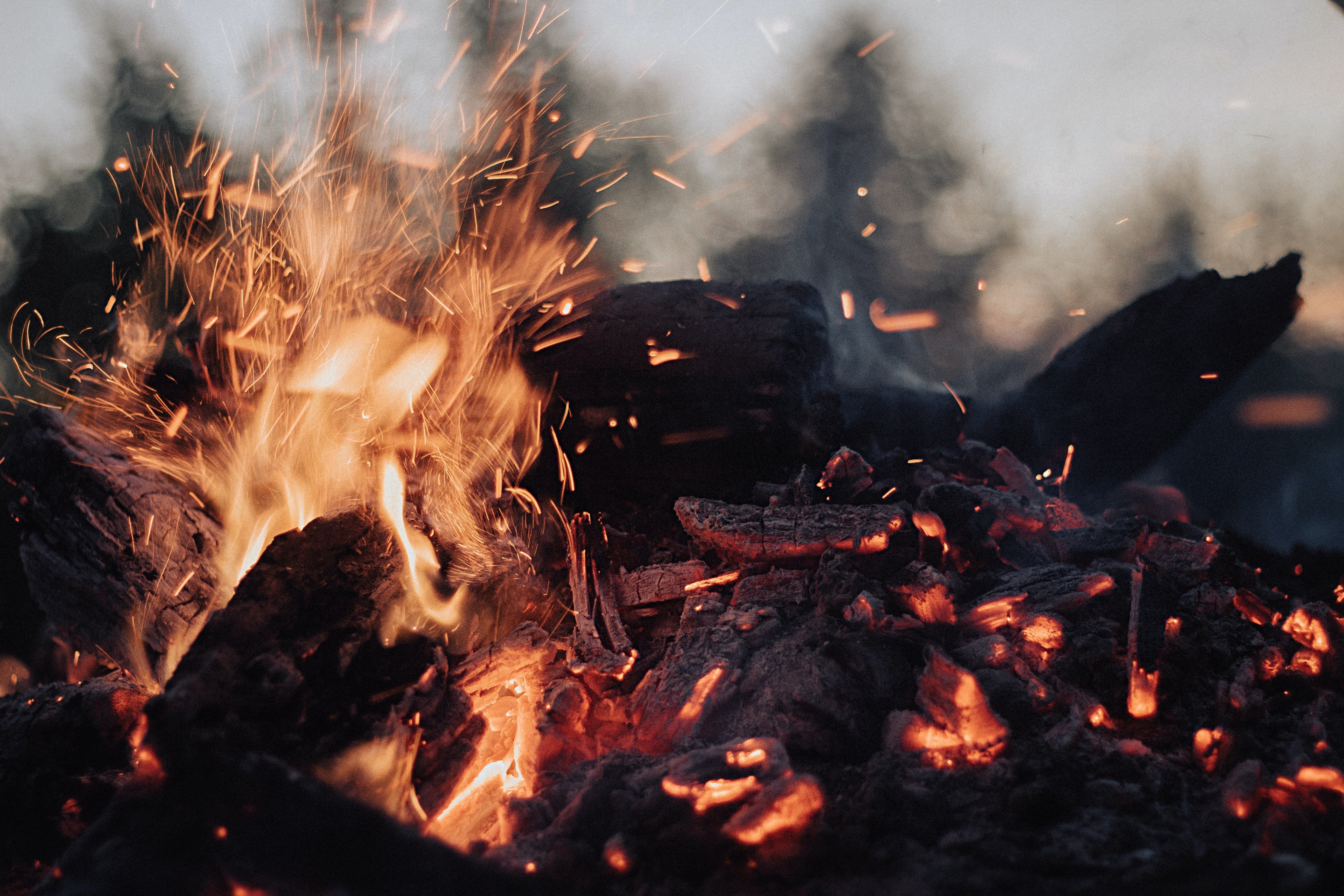
One obvious difference is that a fire is never completely still. The flames are constantly moving, the wood changes as it burns, sparks occasionally rise from the coals and the amount of light changes from one moment to the next.
It's not really entertainment in the modern sense, but you can sit there watching it for a surprisingly long time.
There is also a practical reason to pay attention. A fire needs managing. You notice when the flames are getting smaller, when a piece of wood needs moving or when it's time to add another log. You don't have to concentrate on it every second, but there is just enough interaction to keep you engaged.
That may be one reason sitting around a fire feels different from sitting beside a heater. A heater simply operates. A fire is something you participate in.
There May Be Something Very Old About It
This is where I sometimes think about the idea of an ancestral connection to fire.
Humans have been using fire for a very long time. Long before modern houses and central heating, fire provided warmth, light and a way to cook food. It also gave people a relatively safe place to gather after dark.
It's tempting to describe our attraction to fire as some kind of genetic memory, but that would be going further than the evidence allows. We don't have good evidence that memories or specific experiences such as sitting around a campfire are passed down genetically.
There are more straightforward explanations. Fire provides warmth and light, and humans naturally respond to both. We also learn from an early age that fire is associated with cooking, warmth, gathering and shelter.
But even if there isn't literally an ancestral memory involved, the feeling can still be surprisingly strong.
When you're outside after dark and sitting beside a fire, you have a small area of warmth and light around you while everything beyond it becomes darker and less familiar. There is something naturally reassuring about that arrangement.
Perhaps that's all it takes to explain some of the feeling.
A Fire Creates a Natural Gathering Place
Another thing I notice is how easily people gather around a fire.
Put a few chairs outside and people might sit wherever they happen to find a comfortable spot. Light a fire and the arrangement changes. People naturally orient themselves toward it and move closer when it gets colder.
It becomes the centre of the campsite without anybody having to decide that it should be.
This probably has a lot to do with the practical role fire has played throughout human history. If a group needed warmth, light and a place to cook, the fire was naturally where people spent their time.
That practical function has mostly disappeared from everyday life, but the social habit remains.
You can see it at a campsite, around a backyard fire pit or even at an outdoor restaurant with a fire burning nearby. People are drawn toward it.
It Gives Us a Reason to Slow Down
I think this is one of the biggest differences between sitting around a fire and most of the things we do at home.
A fire isn't particularly efficient.
If you want hot water, you have to wait for it. If you're cooking something, you have to keep an eye on it. If you want the fire to keep burning, you need to add more wood from time to time.
None of this is difficult, but none of it happens instantly either.
At home, we've become used to removing these little delays. We turn on the heating, put food in the oven and boil water with very little effort.
Around a fire, you accept that things take time.
And once you've accepted that, there isn't much reason to hurry.
You can have a conversation, drink something, look at the fire or simply sit there. The fire gives you something to do without demanding your full attention.
That's a fairly rare combination.
There Is Something Satisfying About Making the Heat Yourself
Another part of it is probably the fact that you created the fire.
You found or prepared the wood, collected tinder, started it and kept it going. Even if you used a lighter or a modern fire starter, you still had to put the whole thing together.
That changes how the warmth feels.
A central heating system gives you heat because you turned a thermostat. A campfire gives you heat because you did several small things correctly.
The difference isn't practical. The heater is obviously more efficient.
The difference is psychological.
When you've put some effort into creating something, you tend to notice and appreciate the result more.
This applies to food as well. A simple meal cooked over a fire can feel much more satisfying when you've spent an hour preparing the fire and cooking it.
The food hasn't necessarily become better.
The experience around it has.
The Fire Doesn't Need to Be the Main Activity
One thing I particularly like about a campfire is that you don't actually have to do anything with it.
You can cook on it, boil water, prepare wood or practice different fire-lighting techniques, but eventually you can just sit there.
This is probably where modern life makes the contrast strongest. We're surrounded by things designed to hold our attention. Phones, television, social media, games, news and endless streams of information are all competing for our attention.
A fire doesn't really compete.
You don't have to interact with it constantly. You can watch it for a few minutes, look away, talk to somebody and then find yourself looking at it again.
It's a simple background presence.
Maybe that's why people find it relaxing.
Why It Feels So Familiar
I don't know whether there is anything genuinely ancestral about the feeling of sitting beside a fire. The idea of genetic memory is interesting, but I wouldn't claim that our attraction to campfires proves we are somehow remembering the lives of our distant ancestors.
What we do know is that fire has been closely connected with human life for an enormous amount of time. It has provided warmth, light, food and a place for people to gather. Those associations are about as old as human civilization itself.
So perhaps we don't need to choose between a scientific explanation and the feeling itself.
There are perfectly reasonable explanations for why fire attracts our attention and makes us feel comfortable, but knowing the mechanism doesn't necessarily make the experience any less interesting.
For me, a live fire still hits differently.
I can get warmer faster with a heater. I can cook more efficiently on a stove. I can light a campsite with an LED lantern without carrying a single piece of firewood.
But when there's a proper fire burning outside, I still want to sit beside it.
Maybe it's because we spent so much of our history doing exactly that. Maybe it's because fire gives us warmth, light and something simple to focus on. Maybe it's because creating something useful with our own hands feels good.
Or maybe it's a combination of all of those things.
Whatever the explanation, I don't think we'll be getting tired of sitting around fires anytime soon.
Comments