

What Does "Leave No Trace" Really Mean?
"Leave No Trace" sounds simple enough. You go into the woods, spend some time there and leave without leaving anything behind.
At first, that seems straightforward. Don't throw rubbish on the ground, don't damage things and clean up your campsite before you leave.
But once you spend more time outdoors, you realize that leaving no trace is a little more complicated than that.
A campfire leaves ash. Walking leaves footprints. Cutting wood changes something. Even choosing where to put your shelter means you're having some effect on the place.
So what does Leave No Trace actually mean?
The short answer is that it means minimizing the impact you have on the places you visit.
It doesn't mean pretending you were never there.
Start With the Simple Things
The most obvious part is also one of the most important: take your rubbish with you.
Food packaging, bottles, cans, wipes and other waste have no place in the woods. Even things that seem harmless can cause problems. Food scraps can attract animals, and something as small as a piece of plastic can remain in the environment for years.
The easiest approach is to bring a small bag for your waste and use it from the beginning of the trip. Don't wait until the end and start looking around for rubbish you've forgotten.
The same principle applies to things that people sometimes assume are biodegradable.
Banana peels, orange skins and other food waste are still rubbish if they didn't come from that environment. They can take a long time to break down and may attract animals to places where people camp.
If you brought it in, take it back out.
Choose Your Campsite Carefully
Where you camp makes a bigger difference than many people realize.
If you're in an established campsite, the best option is usually to use the existing site rather than creating another one. The more people concentrate their impact in places already being used, the less pressure there is on other areas.
When wild camping is legal and appropriate, look for a place that can handle your presence without causing unnecessary damage.
Avoid fragile vegetation, wet ground, areas with obvious wildlife activity and places where your shelter would interfere with other people's use of the area.
Don't choose a beautiful patch of untouched moss simply because it looks like a perfect place to put your sleeping mat.
The fact that nobody has camped there before is not necessarily a reason to be the first person to do it.
Be Careful With Fire
Fire is one of the areas where bushcraft and Leave No Trace can sometimes seem to conflict.
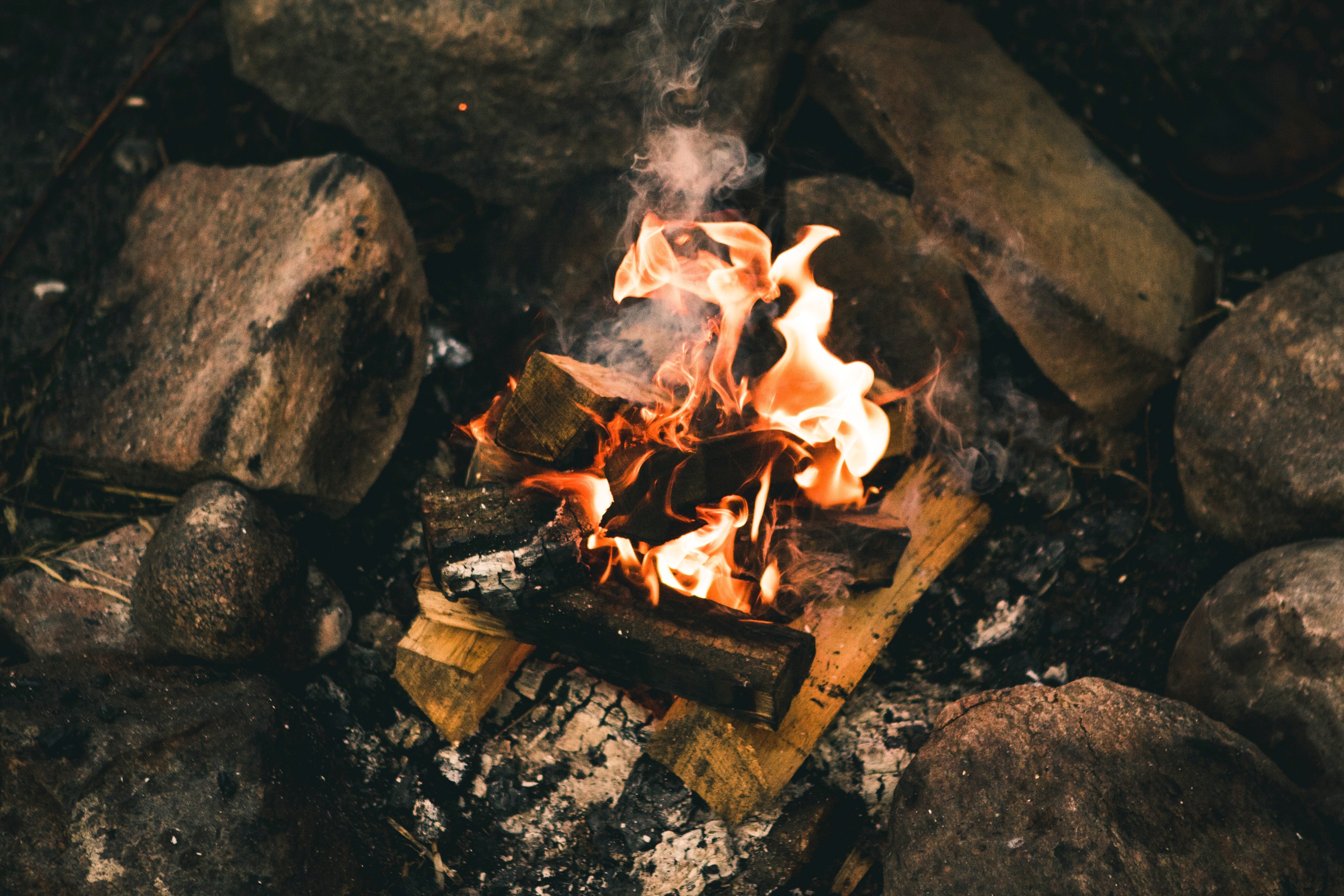
Many people enjoy building and maintaining a campfire, but fires can have a significant impact on the environment. They can damage soil, kill vegetation and leave charcoal and ash behind.
The first question should always be whether fires are actually allowed where you are camping. Local regulations, fire restrictions and weather conditions matter more than your personal preference for cooking over an open fire.
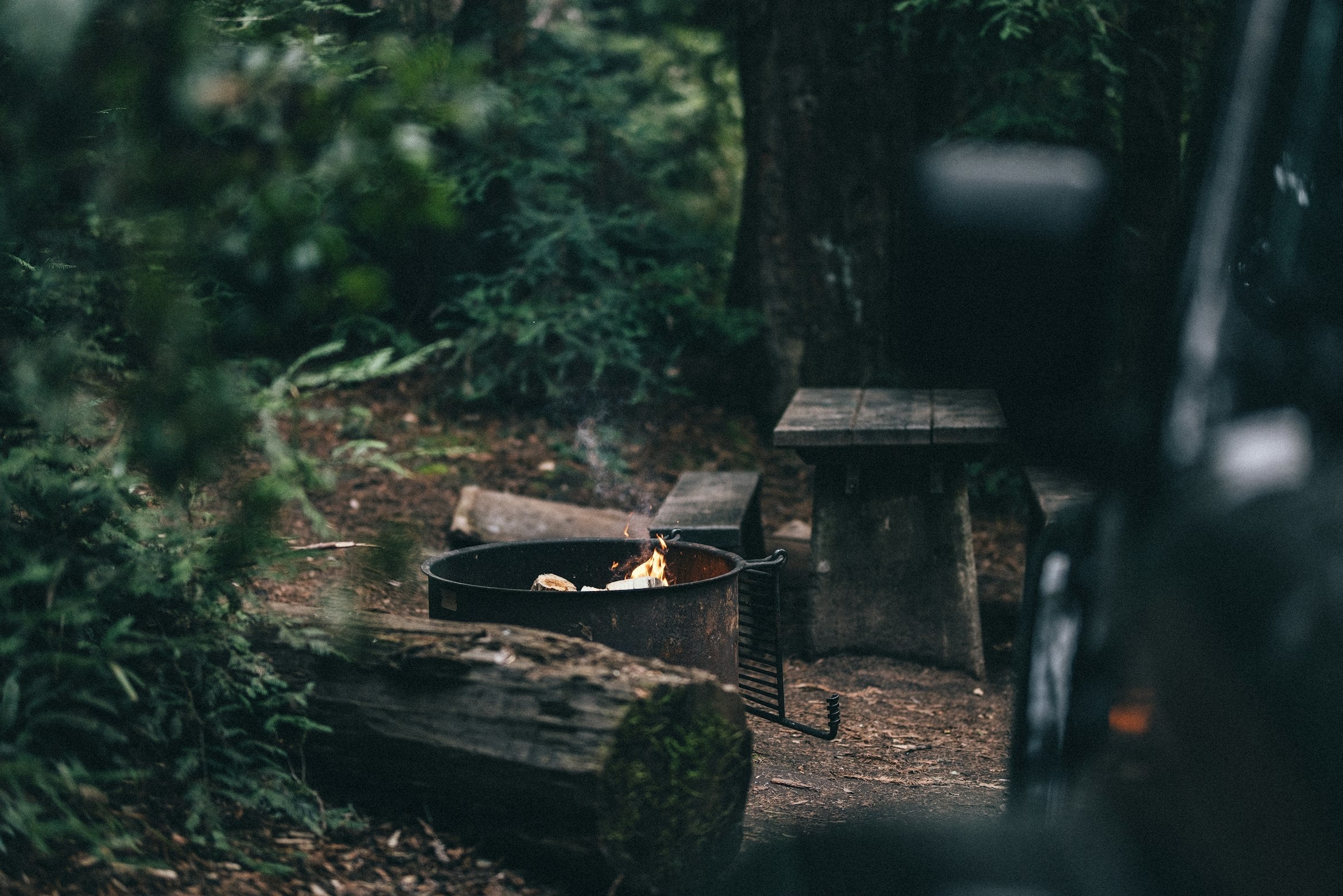
If fires are permitted, using an existing fire ring or designated fire area is generally preferable to creating a new one.
Keep the fire appropriately sized for what you actually need. There is little reason to build a huge fire if you're only cooking a small meal and staying for a few hours.
And before you leave, make sure it is completely extinguished.
A fire that looks dead can still contain hot coals capable of starting a wildfire hours later.
Don't Cut Living Trees for Firewood
This is particularly relevant to bushcraft.
Walking through a forest with an axe or saw can make you feel like there is an unlimited supply of material around you. But that doesn't mean everything you see is available for use.
Cutting living trees for firewood or camp projects can cause unnecessary damage, particularly in places that receive a lot of visitors.
Look for appropriate dead and downed wood where local regulations allow its collection. In some areas, however, even collecting dead wood isn't recommended because it plays an important role in the ecosystem.
This is one of those situations where local rules and the conditions of the area matter.
Bushcraft isn't about proving how much you can cut.
A good outdoor skill is knowing when you don't need to cut anything at all.
Don't Build Things Just Because You Can
One of the more interesting parts of bushcraft is making things from natural materials.
You can build shelters, benches, tripods, cooking structures and all sorts of other useful objects.
But just because you can build something doesn't necessarily mean you should.
If you're practicing these skills in your own woodland or somewhere where this type of activity is specifically permitted, that's one thing. In a public forest or popular camping area, building structures can leave a much larger impact than you might realize.
There's also a simple question worth asking: Do I actually need this?
If you're staying overnight and already have a perfectly good chair, there may be no reason to cut branches and build another one.
Using natural materials responsibly is part of bushcraft. Using them unnecessarily is just creating impact for the sake of creating impact.
Don't Move More Than You Need To
Rocks, branches, logs and other natural objects are easy to overlook because they seem insignificant.
But collectively, moving large amounts of natural material can change a campsite and affect the environment around it.
If you need to clear a small area for your shelter, do what is necessary. But there is rarely a reason to completely rearrange the landscape around your camp.
Don't move rocks from streams to build structures. Don't strip an area of branches. Don't turn a natural clearing into your personal construction site.
The best camp is usually the one that required the least alteration to the place.
Respect Wildlife
You're visiting someone else's environment.
Wild animals don't need to become part of your camping experience.
Don't feed them, don't leave food where they can access it and don't deliberately approach wildlife for photographs.
Even animals that look harmless can become a problem when they learn that campsites provide easy food.
It's also worth paying attention to where you're camping. If you find obvious signs of nesting, dens or other wildlife activity, choose another location.
You don't have to become a wildlife expert before going camping.
Just pay attention and give animals some space.
Keep Noise Under Control
Leave No Trace isn't only about physical damage.
Noise can also affect the experience of other people and the wildlife around you.
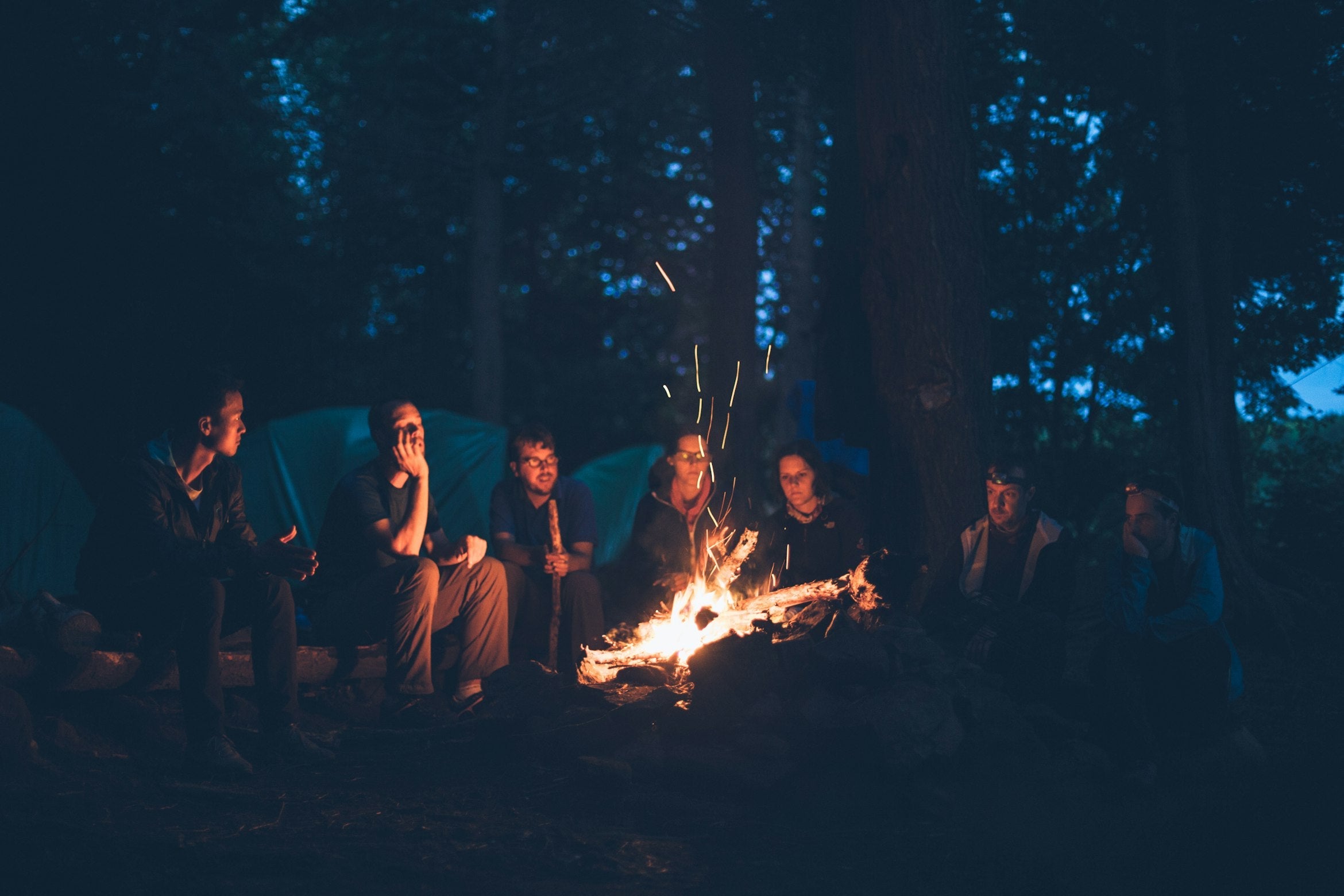
This doesn't mean you have to sit silently around your campfire. Talking with friends, laughing and enjoying yourself are perfectly normal parts of camping.
But there is a difference between having a conversation around camp and turning a quiet forest into an outdoor nightclub.
If you're camping somewhere where other people are nearby, keep the volume reasonable, particularly at night.
One of the reasons people go into the outdoors is to get away from the noise of everyday life. Other people may have come for exactly the same reason.
Leave Natural Objects Where You Find Them
There's always something interesting lying around in the woods.
A nice stone. An unusual piece of wood. Antlers. Feathers. Plants. Interesting mushrooms.
It's tempting to take things home, especially when you find something unusual.
But if everyone did that, popular areas would quickly become picked clean.
In general, leave natural objects where they are unless collecting them is clearly permitted and doesn't cause harm. Some places have specific rules protecting plants, rocks, archaeological objects, antlers or other natural materials.
A photograph is often a better souvenir anyway.
Don't Assume "Natural" Means Harmless
This is another common misunderstanding.
A natural material isn't automatically harmless just because it came from nature.
Food scraps are natural. Cutting a living tree is natural. Digging a hole is natural. Moving rocks is natural.
But all of these things can have an impact.
The question isn't simply whether something is natural or artificial.
The question is whether your activity is causing unnecessary disturbance.
That's a much more useful way to think about Leave No Trace.
Think About the Next Person
There's another simple test I like.
Imagine arriving at your campsite immediately after someone else has left.
What would you want to find?
Probably a clean, undamaged place with no rubbish, no abandoned equipment and no evidence that someone had been careless.
That's the standard worth aiming for.
You shouldn't have to know exactly what the previous person did. The campsite should simply be ready for the next person.
And if you're lucky enough to be somewhere genuinely remote, the same principle applies even if you believe nobody will ever come after you.
You're still sharing that environment with wildlife, plants and the people who may eventually visit.
Leave No Trace Doesn't Mean Don't Touch Anything
I think this is where the idea can sometimes become unnecessarily complicated.
The goal isn't to go into the woods, stand perfectly still and leave eight hours later without disturbing a blade of grass.
That's impossible.
If you walk through a forest, you have an impact. If you sleep under a tarp, you have an impact. If you cook dinner, you have an impact.
The point is to keep that impact reasonable.
Enjoy the outdoors. Build your camp where it is appropriate to do so. Practice your skills where you're allowed to practice them. Make a fire where fires are permitted and safe. Cook your food, sit around with friends and have a good time.
Just think about what you're changing while you're there.
Bushcraft and Leave No Trace Can Work Together
There is sometimes a perception that bushcraft means cutting things, building things and changing the environment, while Leave No Trace means carrying everything in and doing nothing.
I don't think the two have to be opposites.
Good bushcraft requires awareness.
You learn to recognize useful materials instead of cutting everything around you. You learn to use resources efficiently. You learn that you don't need a massive shelter when a simple tarp will do. You learn to make a fire of the appropriate size instead of burning through a huge pile of wood.
Most importantly, you learn to look at the environment before deciding what to do.
That is probably the part of Leave No Trace that matters most.
The Simple Rule
You don't have to memorize a complicated list of rules every time you go camping.
Before you leave, look around your campsite and ask yourself a few basic questions.
Did I take everything I brought with me?
Did I damage anything unnecessarily?
Did I leave a fire completely safe?
Did I disturb wildlife?
Did I alter the campsite more than I needed to?
If the answer to those questions is no, you're probably doing a pretty good job.
The goal isn't to prove that you were never there.
The goal is to make sure that your time outside doesn't make the place worse for the people, plants and animals that come after you.
That's what Leave No Trace really means.
Comments